Not every trend deserves attention. These are the ones that do.
I’ve worked in marketing for eight years.
Long enough to see fads rise, die, and return wearing a new name.
I’ve worked with agencies that swore by data, founders who swore by instinct, and budgets that swore they’d never be cut — until they were.
If there’s one thing I’ve learned after managing hundreds of campaigns, it’s this: most “future trends” are recycled predictions that never aged well.
Every December, someone says, “AI will change everything.”
It already has.
Someone else says, “authenticity will matter.”
It already does.
So I’ve filtered out the noise.
No vague “brand purpose” talk. No empty buzzwords.
Just five shifts I’d personally bet on for 2026 — because I’m already seeing the early signs in real campaigns, real data, and real boardrooms.
These aren’t predictions for likes or LinkedIn applause.
They’re the ones that’ll quietly decide which brands still matter a year from now.
Let’s start with the first — and maybe the most uncomfortable — one:
Creative Shelf Life Will Matter More Than Creative Reach
Let’s start with the uncomfortable truth: your best-performing creative today is already dying.
I’ve seen it firsthand.
One of our grooming campaigns started strong, peaking by week two.
Then, it fell off a cliff.
Same audience. Same targeting.
The only thing that changed? Fatigue.
Alison.ai’s 2025 Creative Fatigue Report confirms what many of us already feel — the average ad loses half its click-through rate by day eleven.
It’s not because people stopped liking your brand.
It’s because they’ve seen it enough.
The solution isn’t to chase reach. It’s to extend lifespan.
Build modular creatives that can evolve mid-flight — switch visuals, update product angles, rewrite hooks without losing the campaign’s core.
Schedule creative health checks every 7–10 days, just like you’d review spend or ROAS.
And budget specifically for “creative maintenance” — not production, but iteration.
Think of your creative like an athlete: it needs rest, rehab, and rotation.
Do that, and you won’t just win attention.
You’ll sustain it.
Authenticity Will Need Proof, Not Just Personality

Authenticity is the buzzword du jour.
In 2025, many marketers assume that partnering with loud, “honest” influencers or deleting polished edges makes a brand feel real.
Problem is: you can fake tone.
You can’t fake trust.
In a 2025 study in the Journal of Marketing, researchers ran interviews with influencers, brands, and consumers — and found this: authenticity hinges on evidence, not persona.
Meanwhile, trust in online content is eroding: Accenture’s Life Trends shows that over half of people now question what they see online.
When I ran campaigns for a men’s grooming line, I caught this early: our “raw voice” posts died faster than those with verifiable moments — a lab test, a behind-the-scenes cut, or a customer photo with metadata.
Those gave us traction longer.
Here’s a deeper, real solution: build micro-proof zones.
Pick 2 core claims (e.g. “natural ingredients,” “clinically tested”).
For each, create one mini-campaign that’s nothing but evidence: lab photos, process short clips, customer labelling… you know the drill.
Let those proof assets run continuously, layered beneath your main brand stories.
Then, tie every influencer or KOL mention back to those proof pillars — they point to evidence, not just “trust me.”
Because in 2026, your voice alone won’t convince anyone.
Your proof will.
Context Will Beat Targeting
If “authenticity” was the currency of 2024, context will be the currency of 2025.
Every marketer loves the idea of precision targeting — the perfect age, the perfect interest, the perfect ad slot.
But here’s the harsh truth: people aren’t static profiles anymore.
They’re moving signals.
And if your ad shows up in the wrong moment, it doesn’t matter how perfect the targeting is — it’s noise.
Google’s 2025 “Future of Ads” report nailed it: relevance now depends less on who sees the ad, and more on when and where they see it.
Even algorithmic giants are shifting from audience-based to moment-based delivery.
When I was running campaigns for our men’s grooming brand, I learned this the hard way.
The same ad tanked at 8 a.m. but crushed it at 8 p.m.
Not because of audience mismatch — but because one moment was before a shower, and the other was after.
Context flipped performance.
So here’s the fix: stop obsessing over precision.
Start obsessing over presence.
Map your customer’s day like a rhythm — find when your product naturally fits into their mental playlist.
Then build creative and media around those windows.
Because in 2025, the best ads won’t find people.
They’ll find their moment.
Your Creative Will Be Treated Like An Asset, Not A Cost
Most brands still build creative for the short term — fast, disposable, reactive.
But in 2026, the smartest ones will start treating it like infrastructure.
WARC’s 2025 “Marketing Efficiency Outlook” noted that brands building long-term creative systems — not one-off campaigns — are seeing up to 38% higher return over time.
That shift isn’t creative theory; it’s portfolio logic.
For my grooming brand, we’ve started applying asset thinking.
Every campaign feeds a creative vault — B-roll, scripts, product shots, social cuts.
We tag and index them by emotion, format, and audience response.
When a new campaign launches, 60% of what we need already exists.
It cuts costs and compounds returns.
The solution: design creative frameworks that scale.
Build assets modularly — so a headline, hook, or visual motif can live across platforms without rework.
Track performance longevity, not just spend efficiency.
And most importantly, involve your finance and brand teams early —
Because once creative is seen as an appreciating asset, it finally gets the budget it deserves.
Real Humans Will Become A Luxury Touchpoint
Press enter or click to view image in full size
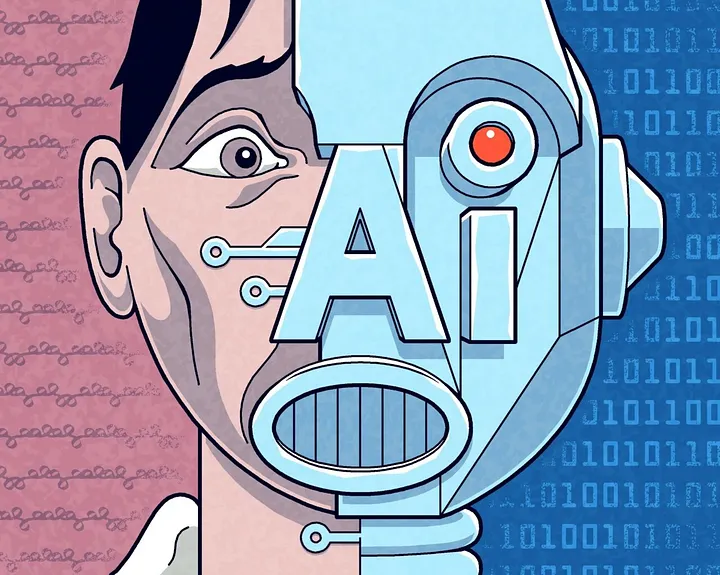
Let’s be honest: AI is doing things we once thought impossible.
Tools like Sora 2 are already producing video ads that rival studio work.
Voice clones are narrating brand stories with eerie perfection.
Copy models now write good-enough ads in seconds.
And that’s the problem: everything’s starting to feel good enough.
When everyone has access to the same creative power, differentiation collapses.
The real scarcity in 2026 won’t be capability — it’ll be connection.
PwC’s 2025 Customer Experience Outlook noted that 43% of consumers are now willing to pay more for a human-led brand experience.
Because in a world of AI fluency, human warmth becomes a luxury.
For our grooming brand, we learned that the moment customers interacted with an actual person — be it through a personalized DMs reply or our in-store “human help desk” — retention jumped 22%.
The irony is, technology should create capacity for humanity, not erase it.
So here’s how to use it:
Automate the repetitive. Humanize the pivotal.
Design touchpoints where a real person adds emotion or story — not efficiency.
Train your team to reappear where AI falls short: post-purchase, community engagement, or problem resolution.
In 2026, your most scalable advantage won’t be AI fluency.
It’ll be human fluency.
Conclusion
The future won’t reward noise. It will reward nuance.
The brands that survive won’t chase trends — they’ll create moments that matter.
So ask yourself: is your marketing ready to be remembered, or just seen?