Turns out, even skeptics fall for a good story.
I like to think I’m immune to marketing.
After all, I am marketing.
But every time I walk into a drugstore, some neatly designed bottle of “Hydration Therapy with Arctic Birch Extract” gives me that stupid, irrational feeling — the one that whispers, This one’s different.
Spoiler: it never is.
Still, I buy it anyway.
The 2-for-$12 Lie We Tell Ourselves
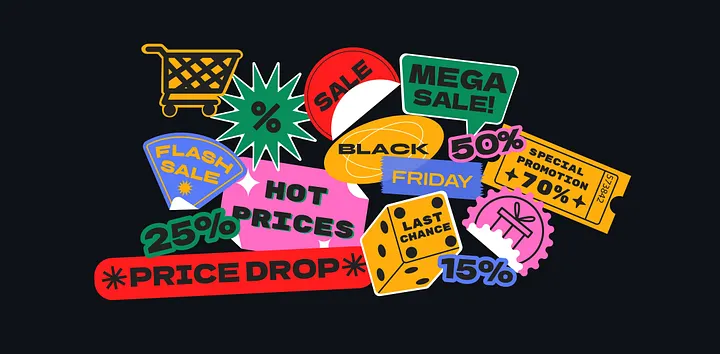
It always starts with a deal.
The bright yellow tag, the promise of value, the voice in my head saying, You’re saving money.
You’re not.
You’re just falling for the oldest trick in the book — the one you probably used in your last campaign pitch.
“Perceived value,” we call it.
A nice, polite way of saying: we know how to make people spend twice as much without realising it.
The funny thing is, even when I know it, I still do it.
Because logic isn’t what drives us to the cashier.
Emotion does.
And the emotion behind a “2-for-$12” tag?
Security. The illusion that you’re being smart, responsible, efficient.
Like you’ve beaten the system by playing within it.
Of course, the solution isn’t to swear off promotions — we both know that’s never happening.
The better one?
Acknowledge the trick. Enjoy it anyway.
If you’re going to fall for marketing, at least make it a conscious choice.
Packaging: The Real Love Language
Let’s be honest.
We don’t fall in love with shampoo.
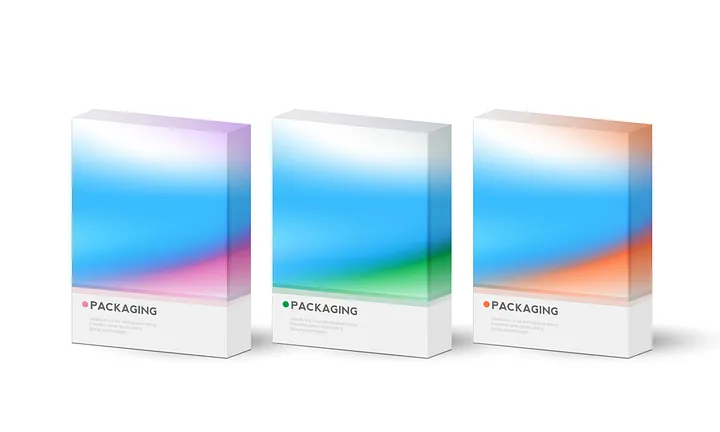
We fall in love with bottles that look like they belong in a boutique hotel bathroom.
The matte texture. The minimal font.
The cap that makes a satisfying click.
We don’t buy shampoo; we buy aspiration.
Packaging is emotional architecture.
It tells us who we could be — the kind of person who wakes up early, drinks lemon water, and folds towels properly.
That’s what good branding does: it turns functionality into fantasy.
And that’s also why the plain bottle always feels like a betrayal.
It works just as well, but it doesn’t say anything about you.
So, what’s the fix here?
Don’t beat yourself up for wanting pretty things.
Just… see through them a little.
Before you buy, ask yourself:
Do I like this product, or do I just want to look like the person who would?
The Suds Don’t Matter (But the Story Does)
Here’s the thing they don’t tell you:
Most shampoos are 90% water and marketing.
But what we really buy is story.
“Tested by dermatologists.” “Inspired by volcanic minerals.” “Formulated in Japan.”
Half the time, that means someone in Japan once said “yes” during product testing.
But the story still works.
Because it’s not about accuracy — it’s about identity.
We don’t want the truth.
We want belonging.
That’s why we’ll pay extra for “eco-friendly” even if we have no idea what that actually means.
It’s less about saving the planet and more about signaling we’re the kind of people who would.
If you ever want to resist that kind of marketing magic, here’s a trick:
Look for the sentence that makes you feel good about yourself.
That’s the one you’re buying — not the product.
We’re All Just Rebranding Ourselves, Anyway
It’s easy to laugh at consumers for falling for branding.
Harder when you realize you do the same thing every time you post a photo on Instagram.
We all brand ourselves.
The curated photos, the witty captions, the little details we conveniently crop out.
Personal branding is just corporate branding with better lighting.
We say we want “authenticity,” but what we really mean is “authenticity that photographs well.”
And that’s why branding works — because it mirrors human behaviour.
The truth is, brands aren’t manipulative.
They’re just reflective.
They show us our own contradictions, but with better typography.
So maybe the way forward isn’t to hate branding, but to use it intentionally.
If you can sell the world an image of yourself, at least make sure you actually like the person in the ad.
I Miss When Marketing Was Bad
Here’s my unpopular opinion:
I kind of miss bad marketing.
The overacted TV spots. The jingles that got stuck in your head.
The cheesy taglines that made no sense but somehow worked.
It was honest. It was messy.
It was human.
Now everything’s optimized, automated, A/B tested into oblivion.
Even the mistakes feel algorithmically generated.
We call it progress, but I sometimes wonder if we’ve lost the charm of trying too hard.
Because behind those imperfect campaigns were real people — tired copywriters, cranky art directors, someone who spilled coffee on the storyboard and said, “Screw it, it still works.”
That humanity doesn’t fit in dashboards.
And maybe that’s why we still cling to overpriced shampoo bottles — they remind us there’s still a trace of human impulse in a perfectly designed world.
So here’s a suggestion:
Make something a little bad on purpose.
A typo in your caption. A joke that doesn’t land.
A photo that’s not filtered to death.
Sometimes imperfection is the only proof you were really there.
The Day I Finally Bought the $4 Shampoo (And Nothing Happened)

Eventually, I did it.
I bought the cheapest shampoo on the shelf — the kind that proudly doesn’t care about branding.
No story. No minimal design.
Just a bottle that screamed, I exist to clean your scalp.
It felt liberating at first. Like I was sticking it to the system.
Then I used it.
And nothing happened.
My hair was fine. My wallet was happy.
But the shower felt… a little less special.
Turns out, I missed the lie.
The tiny, harmless illusion that I was doing something good for myself.
And maybe that’s okay.
Because good branding, at its core, isn’t about manipulation.
It’s about meaning.
It turns the ordinary into something worth noticing — even if it’s just shampoo.
So What’s the Lesson Here?
Honestly, there isn’t a neat one.
You can’t logic your way out of emotion.
But you can learn to notice it.
To see where marketing ends and your own desires begin.
To forgive yourself for wanting nice things — even if they’re a little overpriced.
After all, we all have our versions of overpriced shampoo.
What’s yours?